Designer Verner Panton (1926–1998)
Brand Rosenthal, Germany
Era 1970s
Materials Lacquered wood, foam, fabric
Size 63 × 114 × 77 cm
Bibliography Alexander von Vegesack and Mathias Remmele (eds.), Verner Panton – Das Gesamtwerk, Vitra Design Museum, Weil am Rhein, 2000, p. 267 (model illustrated).
Condition Good
Selected items – We change the way you think about forever.
The Relaxer II is one of those designs by Verner Panton that defies conventional furniture categories. Designed in 1974 for Rosenthal Studio-Line, it combines the qualities of an armchair, a lounger, and a rocking chair, making it a characteristic example of Panton's vision of living spaces that deliberately break away from traditional concepts of seating.
The construction is remarkably minimal. Two broadly curved wooden runners define the entire silhouette, serving simultaneously as the supporting structure and the rocking mechanism. Between them sits a slatted base supporting the continuous upholstered seat and backrest cushion. There are no legs, no separate underframe, and hardly a structural element that does not also contribute to the overall form.
It is precisely this consistency that makes the Relaxer II so interesting. Rather than simply designing a comfortable armchair, Panton proposes a different approach to sitting: low to the ground, reclined, and free to move. The sweeping curves follow the body and its movements rather than traditional notions of furniture design.
The example offered here combines a black lacquered wooden frame with a vibrant red upholstered cushion. The contrast between black and red further emphasizes the chair's graphic character: the dark curves outline its construction, while the red upholstery forms a continuous surface between them. The side profile, in particular, reveals how consistently Panton integrates structure and appearance.
The manufacturer adds another dimension to the design. In the early 1970s, Rosenthal expanded its product range to include furniture, collaborating with internationally renowned designers. The Relaxer II emerged during this relatively brief period of Rosenthal furniture production and represents a less familiar aspect of Panton's work compared with his well-known plastic furniture.
The particular appeal of this chair lies in the fact that it is unmistakably Panton without relying on one of his most famous designs. The Relaxer II reveals a less familiar, almost experimental side of his work: a piece of furniture with a strong spatial presence, reduced to just a few structural elements, yet virtually impossible to mistake for any other chair.
Condition Report
The chair is in overall good condition, consistent with its age and use. The lacquered wooden frame shows localized abrasion and scratches. Some areas have been partially touched up in the past.
The red upholstered cushion shows signs of age and use and has recently been cleaned.
Overall, the Relaxer II retains a well-balanced appearance with an authentic, age-related patina. The existing signs of wear contribute to the chair's original character without significantly affecting its overall appearance.
Request more information

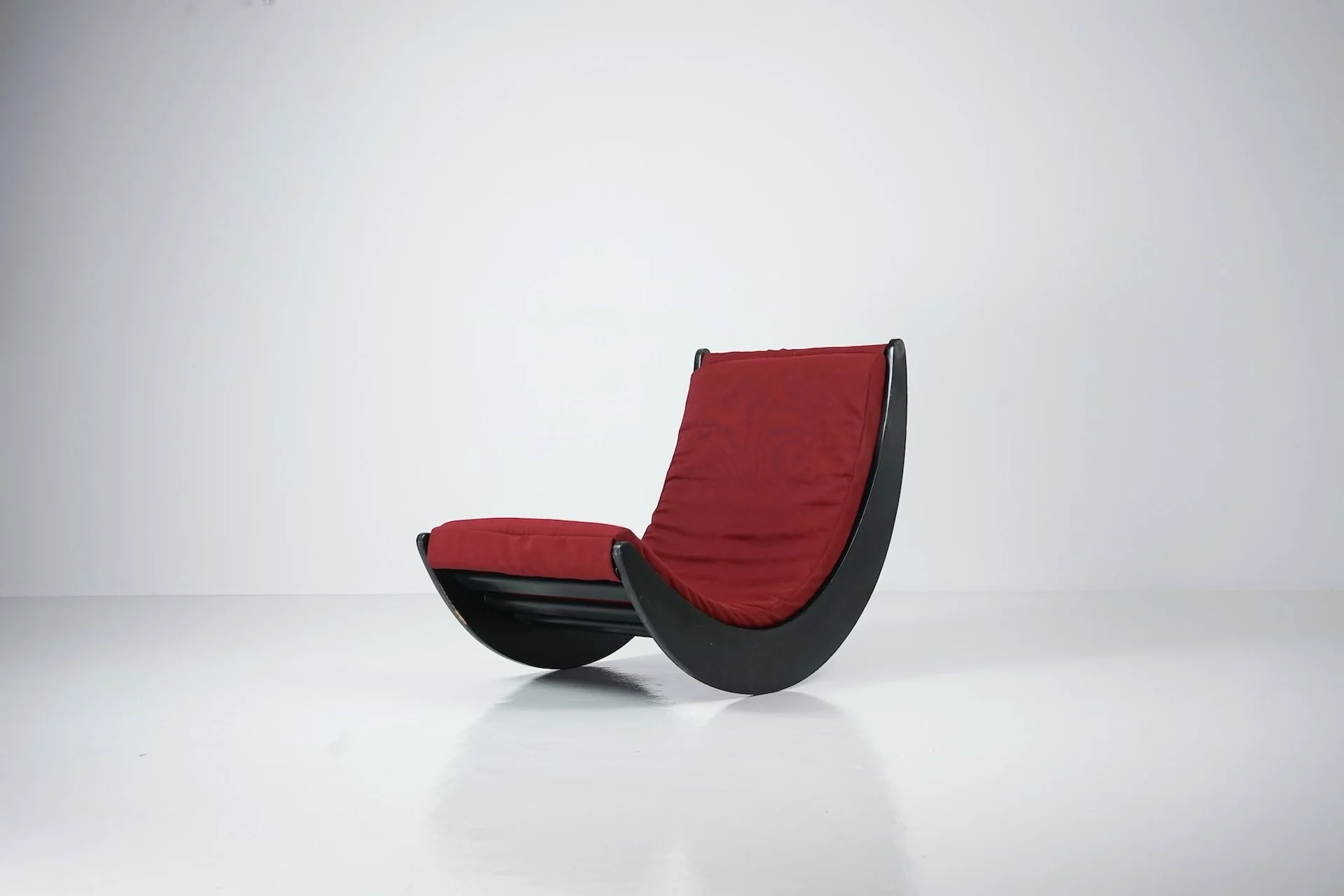 Image 1 of 12
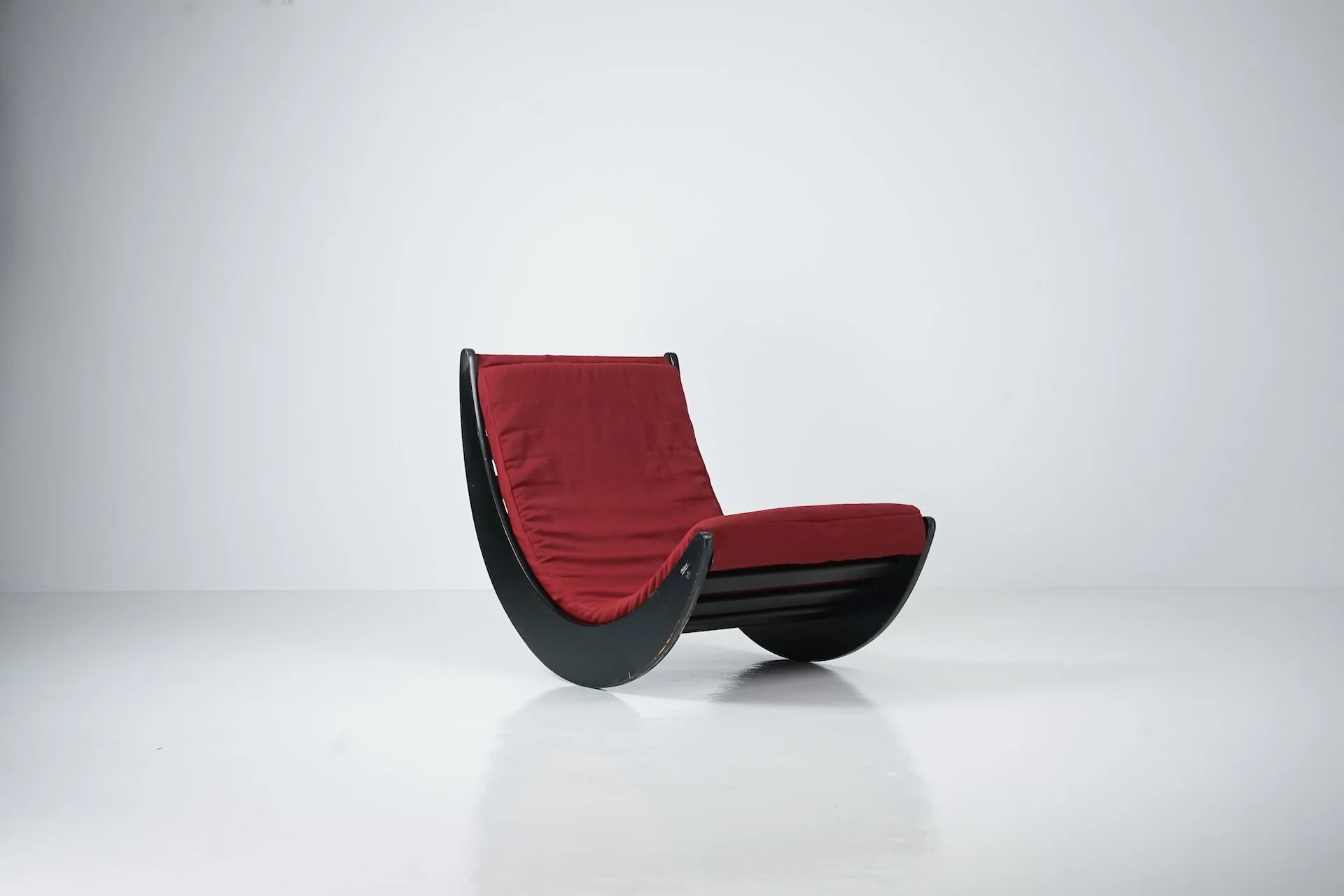 Image 2 of 12
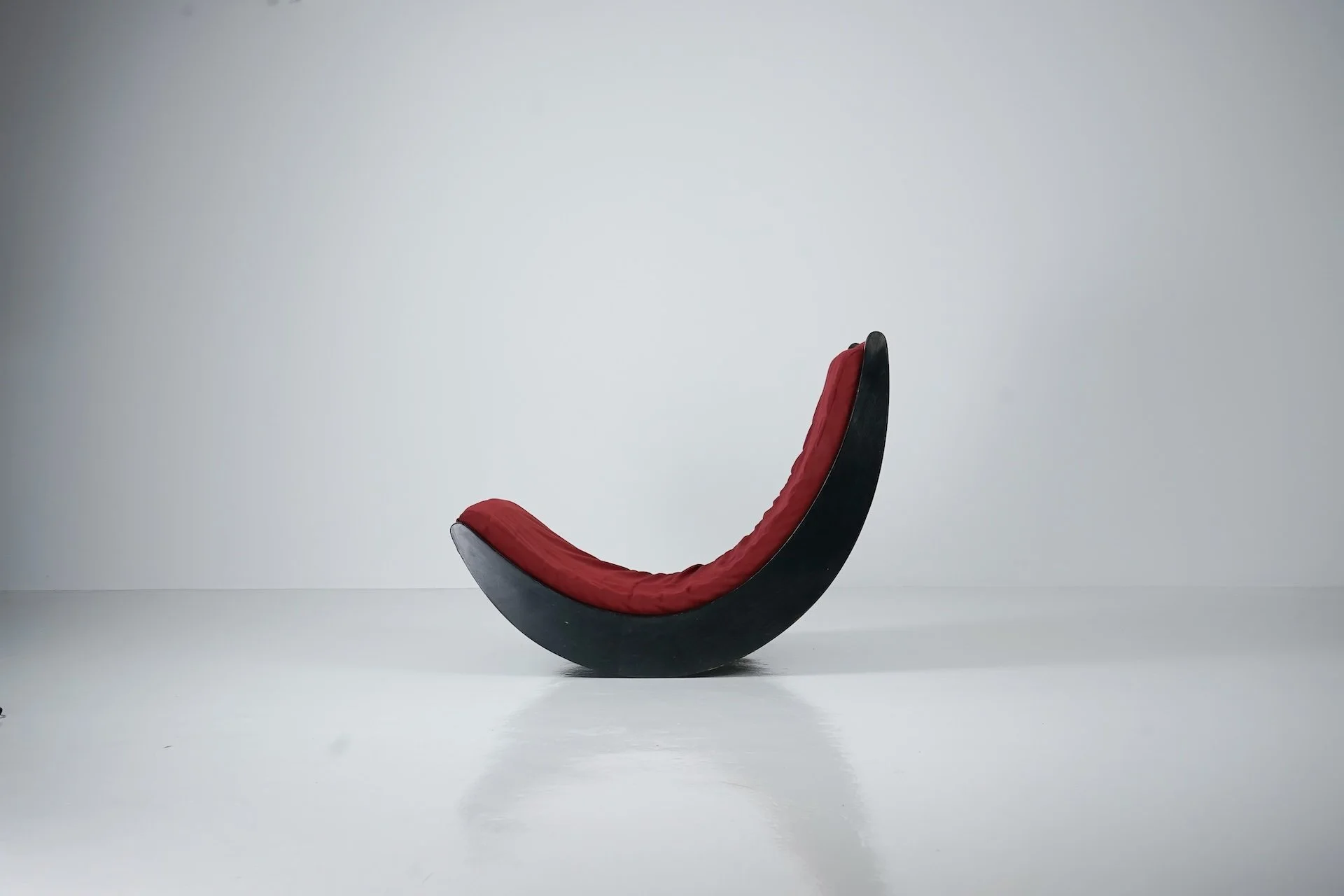 Image 3 of 12
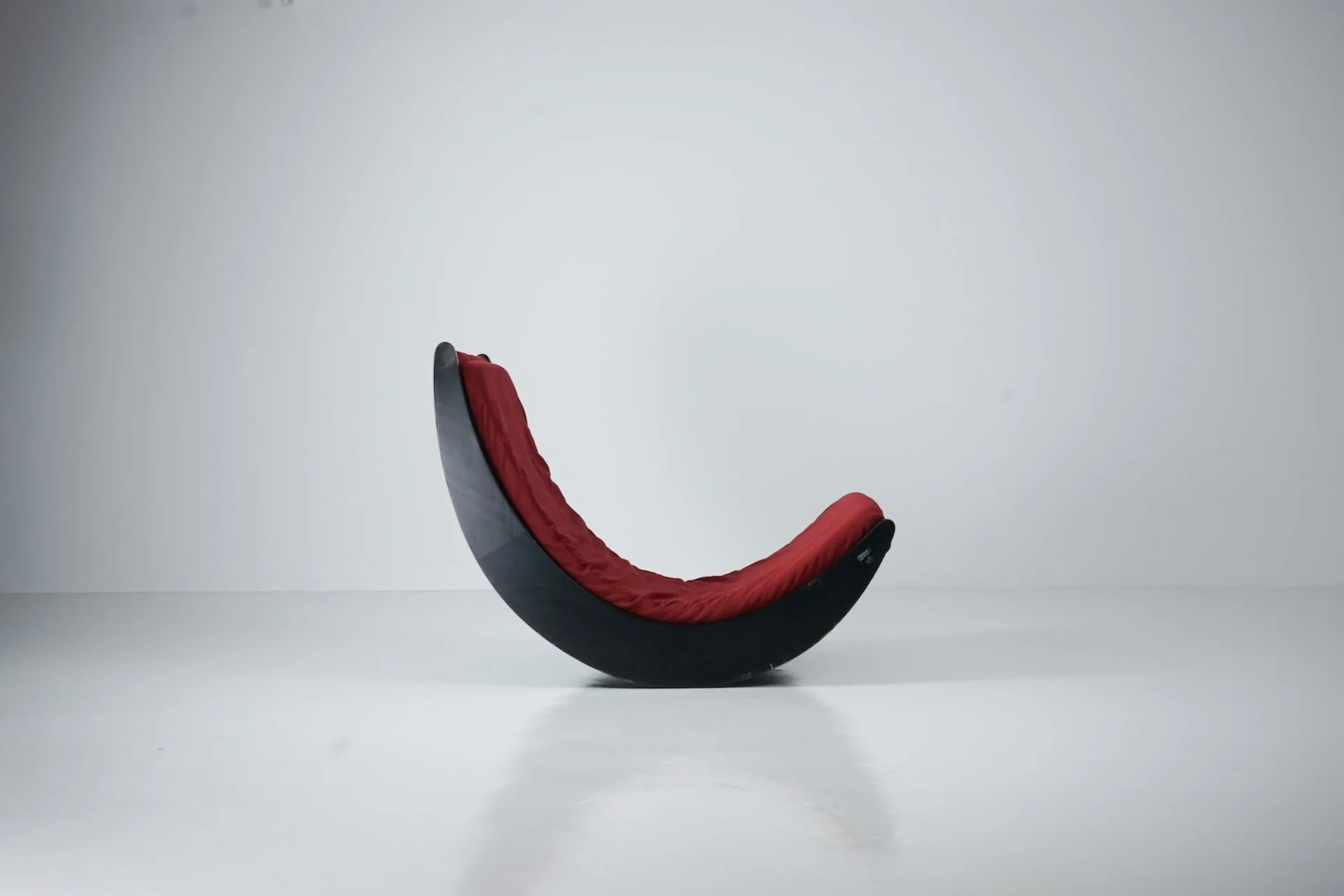 Image 4 of 12
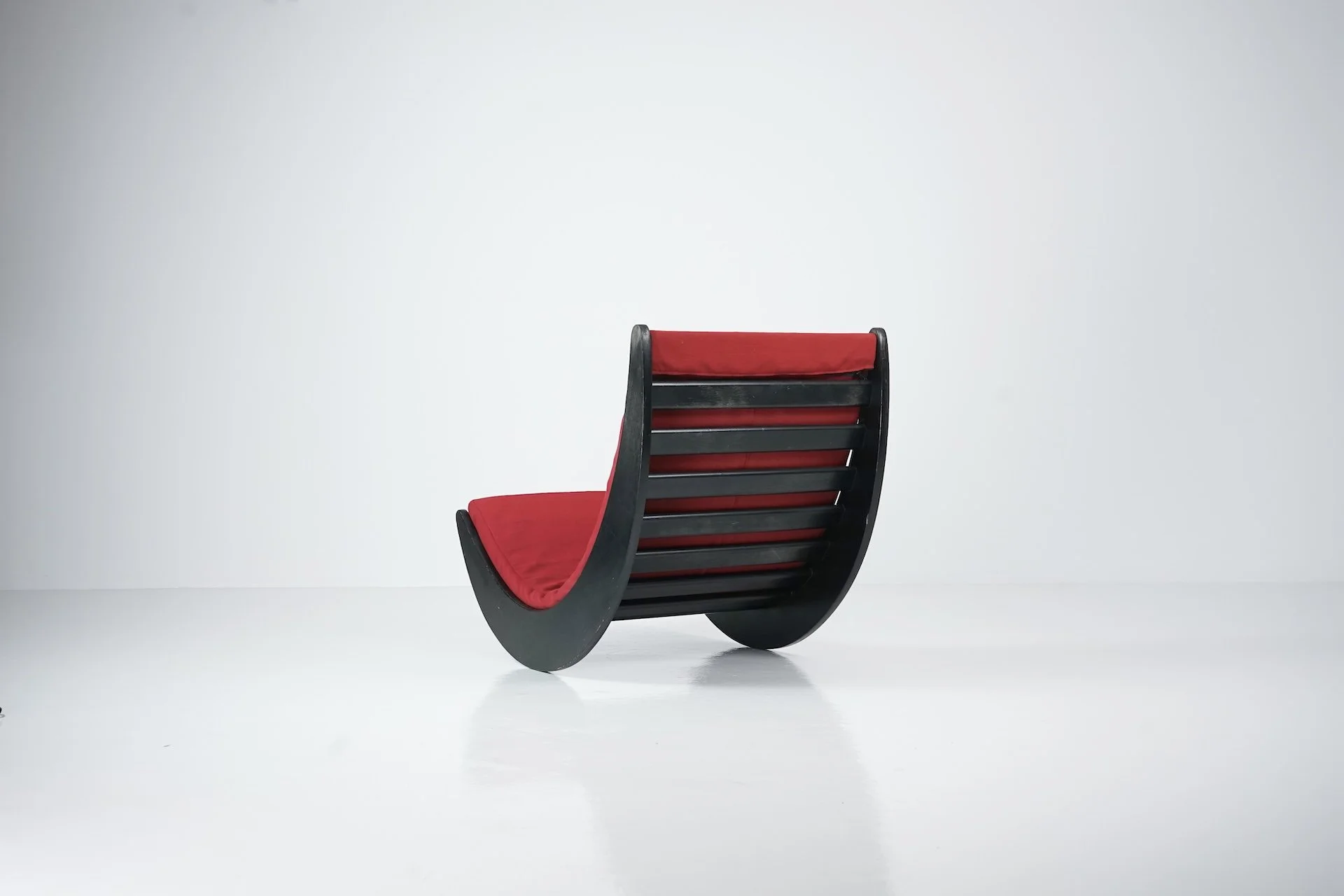 Image 5 of 12
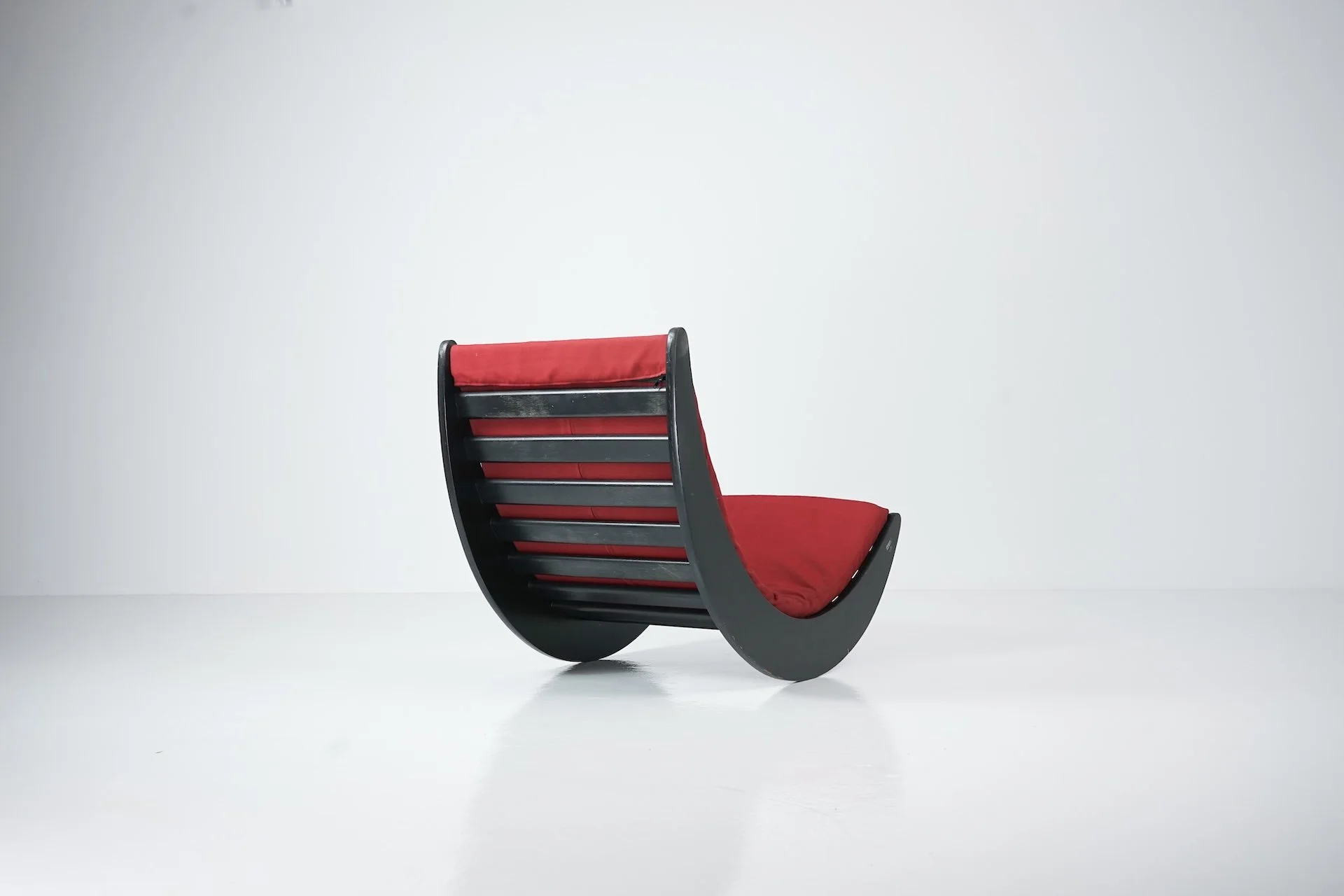 Image 6 of 12
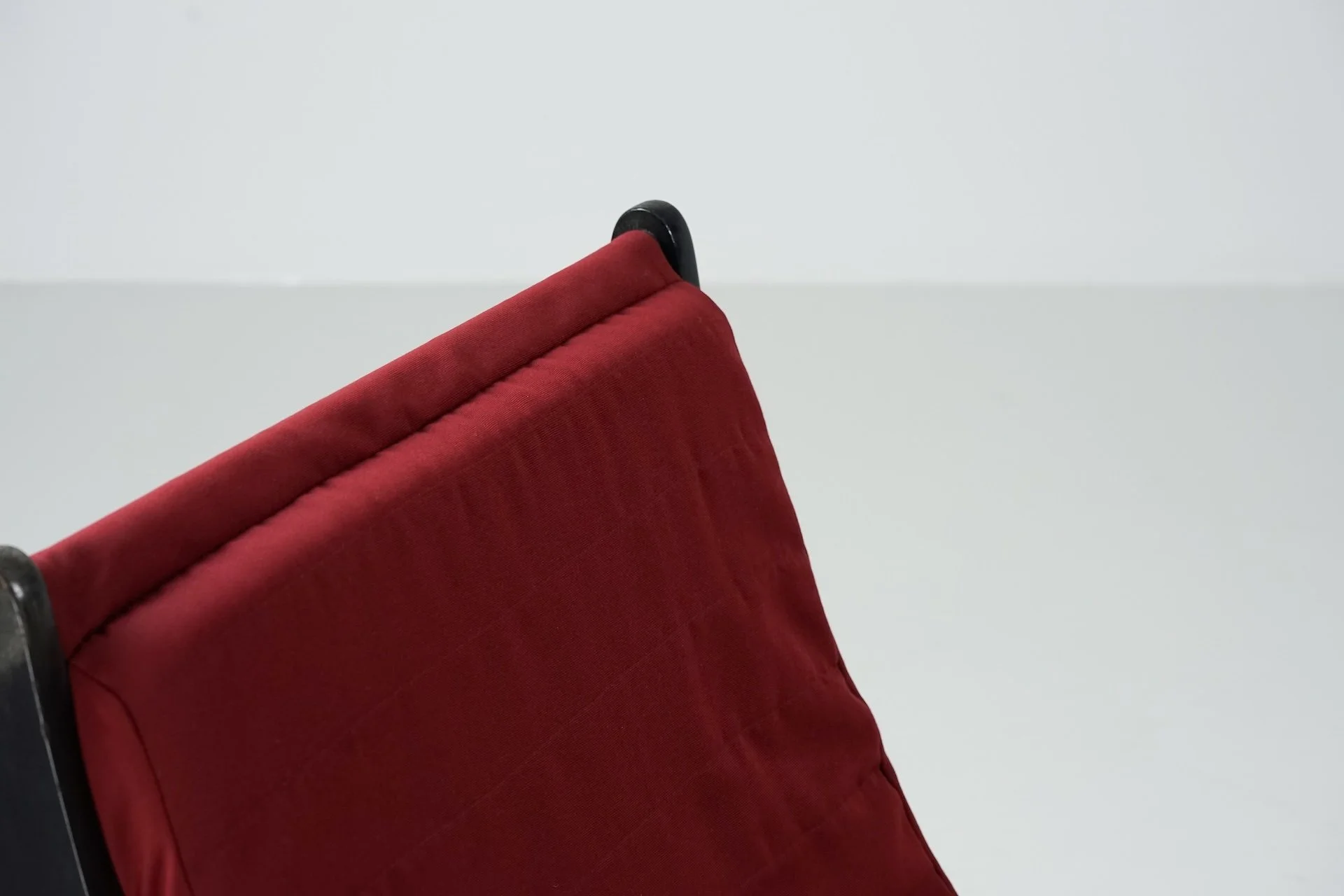 Image 7 of 12
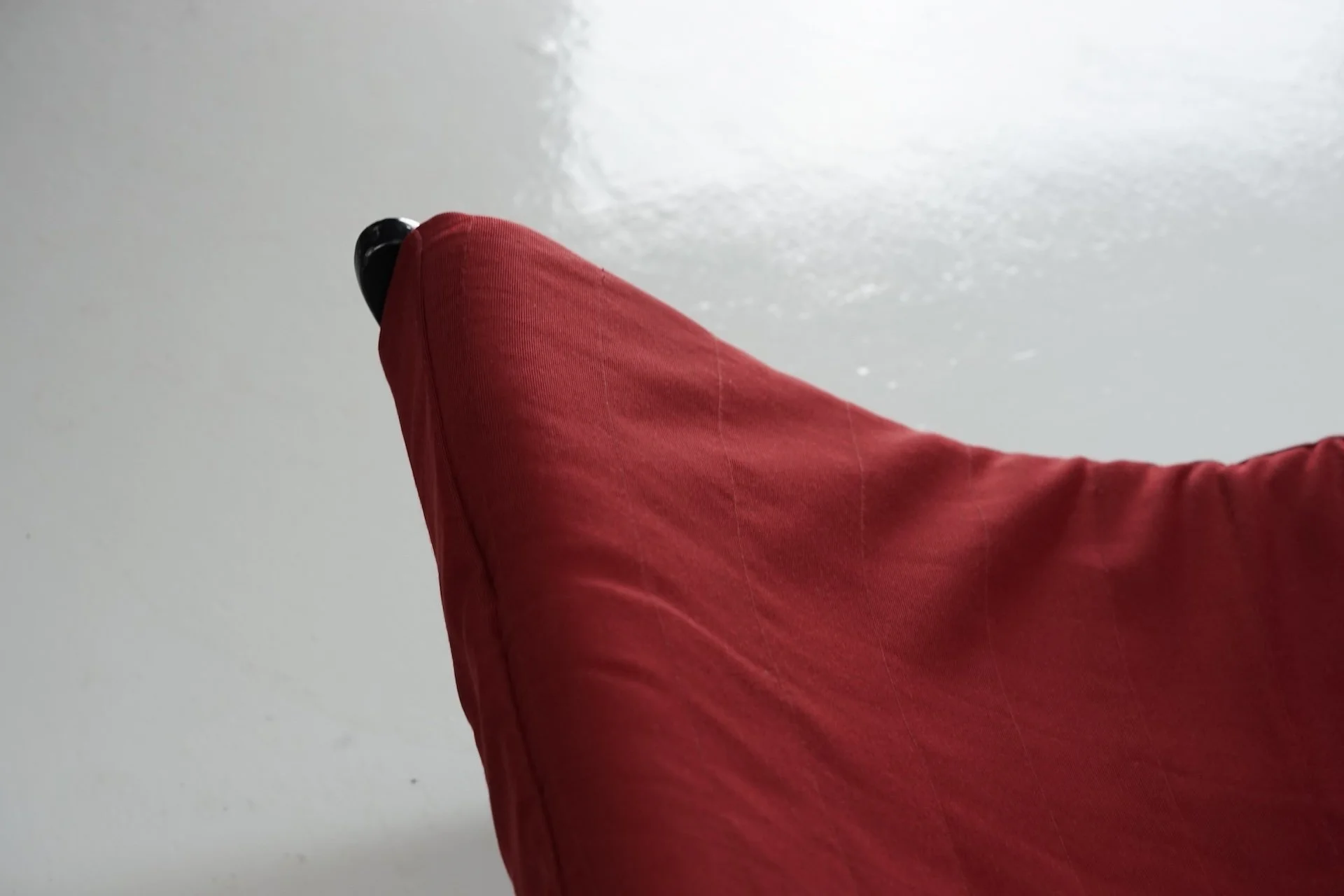 Image 8 of 12
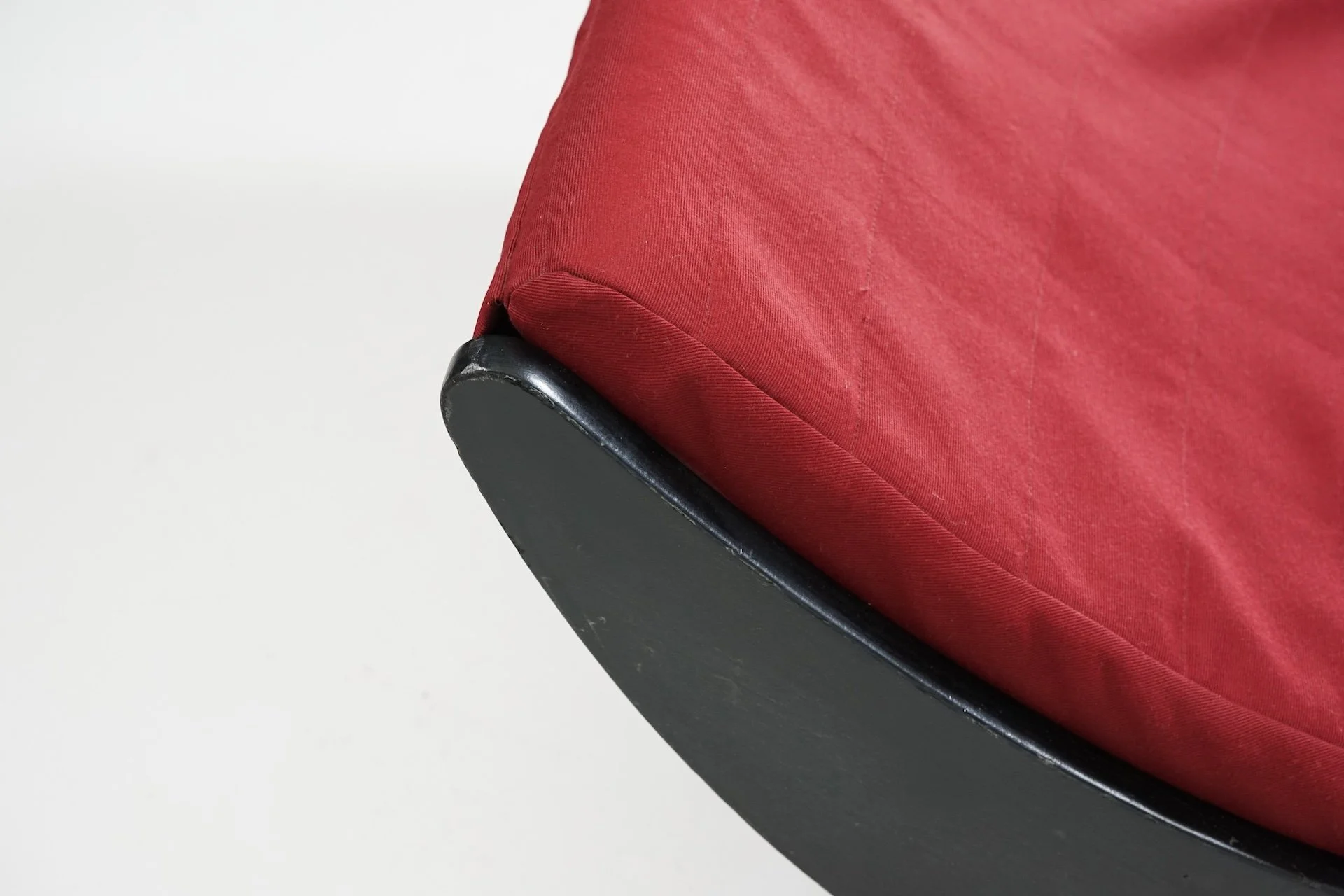 Image 9 of 12
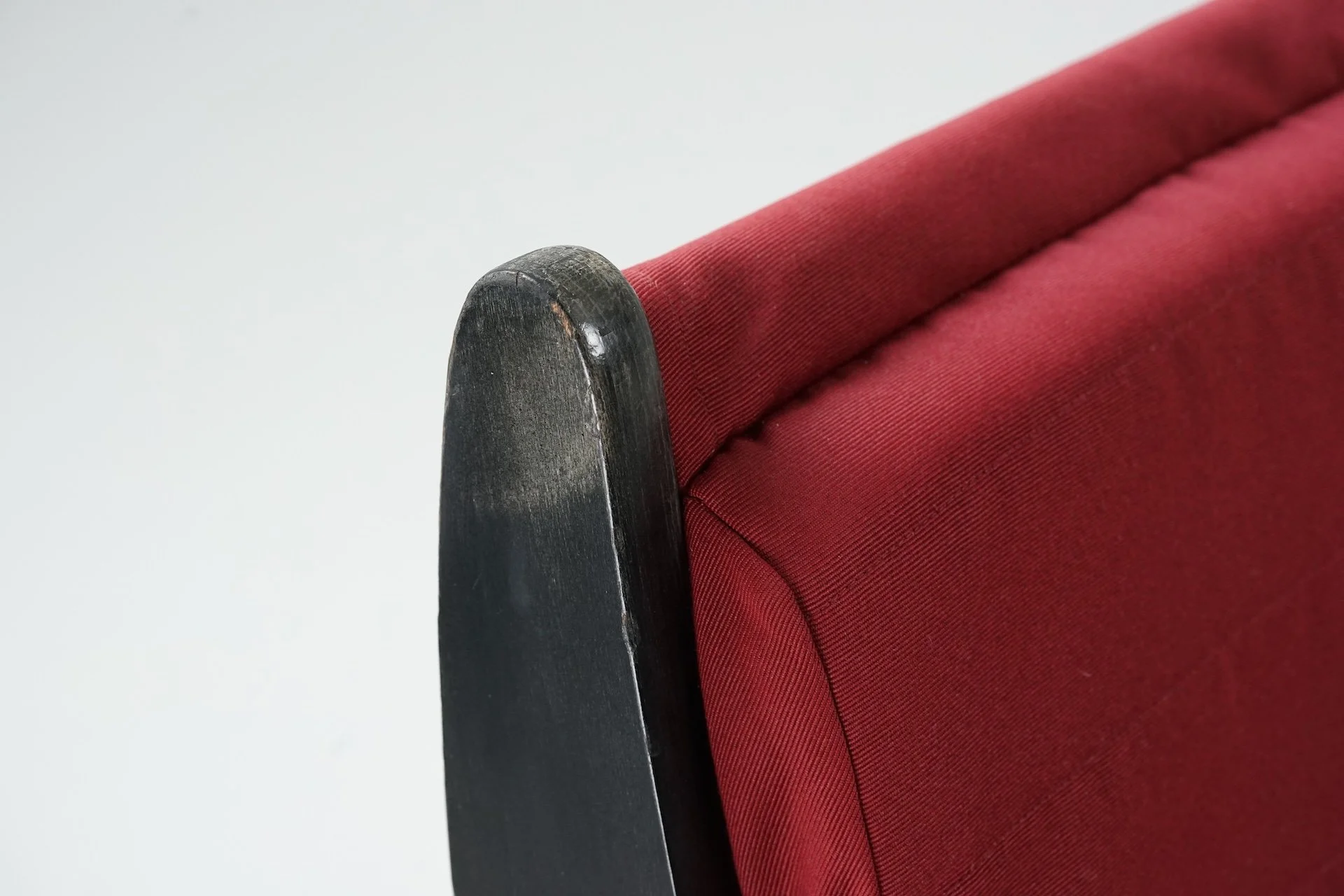 Image 10 of 12
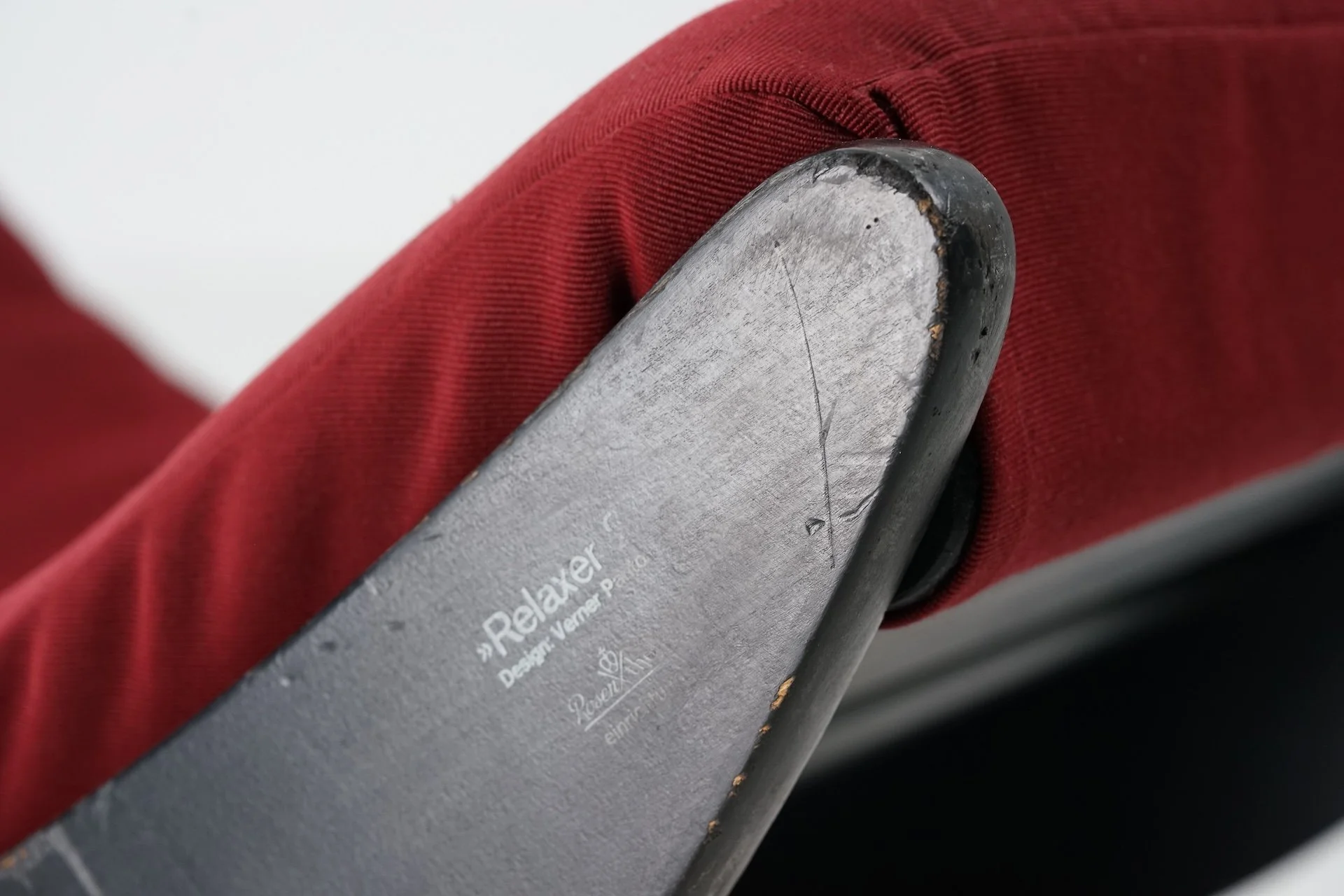 Image 11 of 12
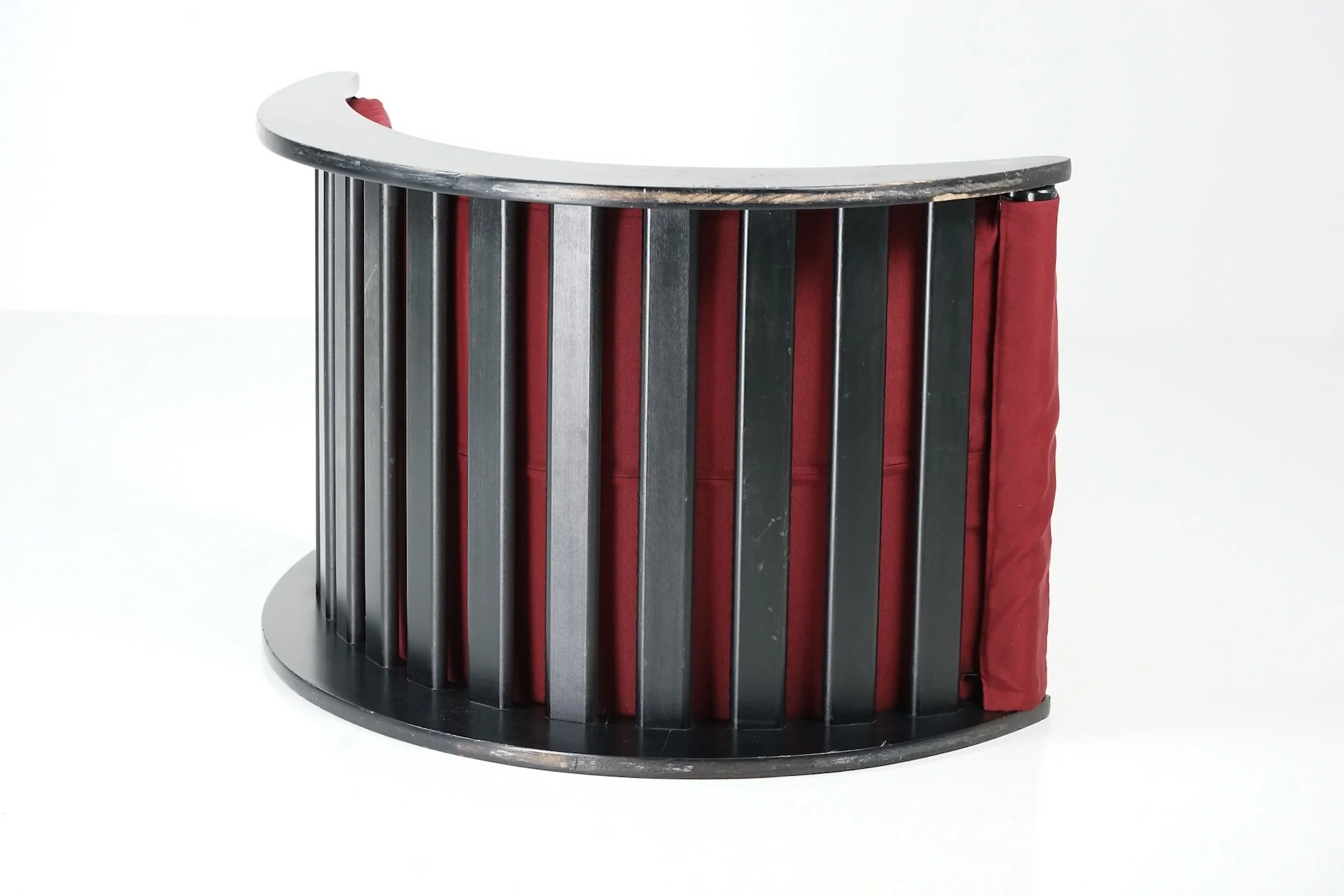 Image 12 of 12