Designer Javier Mariscal
Brand Akaba, Spain
Era 1980’s
Material chrome plating, faux leather
Size 42 cm x 57 cm x 97 cm I seat height 43 cm
Condition Very Good
Price on request
Request more information
“Garriris” Chair or Art Object
The Garriris chair stages furniture as character rather than as functional object. Its formally reduced, metallic structure serves merely as a framework for a wry figuration: the backrest, crowned with two oversized “ears,” evokes the pop iconography of late modernity, while the rounded feet ultimately tip the piece toward playfulness.
It is one of those rare designs in which irony and precision do not exclude but rather affirm each other. The industrial coolness of the material contrasts with the anthropomorphic warmth of the form – a tension that positions the work between design, sculpture, and citation.
Designer
Javier Mariscal (b. 1950), Spanish designer and illustrator, represents a generation of creators who in the 1980s liberated design from its modernist earnestness. His works, always sustained by an unbroken sense of humor and a profound trust in the expressive power of the line, embody an attitude: design as an emotional event rather than a purely functional discipline.
Mariscal thinks through drawing – in such a way that every object, whether chair, poster, or mascot, becomes a character in its own right. This anthropomorphizing of the everyday, this drawing as a mode of thinking, makes him an artist operating within design. His figure Cobi for the 1992 Olympic Games in Barcelona was less a mascot than a manifesto: a symbol of a city reinventing itself through irony and lightness.
In the history of Spanish design, Mariscal marks a turning point – away from the industrial product and toward the narrative object. He reminds us that design serves not only problem-solving but also seduction.
Condition
The chair is in remarkably good, well-preserved condition. Particularly notable are the distinctive ears – a structural weak point in comparable examples, which often lose rigidity over time – that here appear in flawless shape: upright, stable, and showing no signs of material fatigue.
Deutsch
"Garriris" Stuhl oder Kunstobjekt
"Garriris" der Stuhl inszeniert das Möbel als Charakter, nicht als Funktionsträger. Die formal reduzierte, metallische Struktur dient lediglich als Bühne für eine augenzwinkernde Figuration: Die Rückenlehne, bekrönt von zwei überproportionalen „Ohren“, evoziert die Pop-Ikonografie der späten Moderne, während die abgerundeten Füße das Objekt endgültig ins Spielerische kippen lassen.
Es handelt sich um eine jener seltenen Entwürfe, in denen sich Ironie und Präzision nicht ausschließen, sondern gegenseitig legitimieren. Die industrielle Kühle des Materials kontrastiert mit der anthropomorphen Wärme der Form – eine Spannung, die das Werk zwischen Design, Skulptur und Zitat positioniert.
Designer
Javier Mariscal (geb. 1950) spanischer Designer und Illustrator, steht exemplarisch für jene Generation von Gestaltern, die in den 1980er Jahren das Design aus seiner modernistischen Ernsthaftigkeit befreiten. Seine Arbeiten, stets von einem ungebrochenen Sinn für Humor und einem tiefen Vertrauen in die Kraft der Linie getragen, formulieren eine Haltung: Gestaltung als emotionales Ereignis, nicht als rein funktionale Disziplin.
Mariscal denkt mit dem Stift – und zwar so, dass jedes Objekt, ob Stuhl, Plakat oder Maskottchen, zugleich als Charakter erscheint. Diese Anthropomorphisierung des Alltäglichen, das Zeichnen als Form des Denkens, macht ihn zu einem Künstler, der im Design operiert. Seine Figur „Cobi“ für die Olympischen Spiele 1992 in Barcelona war weniger Maskottchen als Manifest: ein Symbol einer Stadt, die sich über Ironie und Leichtigkeit neu erfand.
In der Geschichte des spanischen Designs markiert Mariscal damit einen Wendepunkt – weg vom industriellen Produkt, hin zum erzählerischen Objekt. Er erinnert daran, dass Gestaltung nicht nur der Lösung, sondern auch der Verführung dient.
Zustand
Der Stuhl befindet sich in einem bemerkenswert guten, gepflegten Zustand. Gerade die markanten Ohren – bei vergleichbaren Exemplaren häufig eine strukturelle Schwachstelle, die im Laufe der Zeit an Festigkeit verlieren – zeigen sich hier in makelloser Form: aufrecht, stabil, ohne jede Spur von Ermüdung des Materials.
Designer Javier Mariscal
Brand Akaba, Spain
Era 1980’s
Material chrome plating, faux leather
Size 42 cm x 57 cm x 97 cm I seat height 43 cm
Condition Very Good
Price on request
Request more information
“Garriris” Chair or Art Object
The Garriris chair stages furniture as character rather than as functional object. Its formally reduced, metallic structure serves merely as a framework for a wry figuration: the backrest, crowned with two oversized “ears,” evokes the pop iconography of late modernity, while the rounded feet ultimately tip the piece toward playfulness.
It is one of those rare designs in which irony and precision do not exclude but rather affirm each other. The industrial coolness of the material contrasts with the anthropomorphic warmth of the form – a tension that positions the work between design, sculpture, and citation.
Designer
Javier Mariscal (b. 1950), Spanish designer and illustrator, represents a generation of creators who in the 1980s liberated design from its modernist earnestness. His works, always sustained by an unbroken sense of humor and a profound trust in the expressive power of the line, embody an attitude: design as an emotional event rather than a purely functional discipline.
Mariscal thinks through drawing – in such a way that every object, whether chair, poster, or mascot, becomes a character in its own right. This anthropomorphizing of the everyday, this drawing as a mode of thinking, makes him an artist operating within design. His figure Cobi for the 1992 Olympic Games in Barcelona was less a mascot than a manifesto: a symbol of a city reinventing itself through irony and lightness.
In the history of Spanish design, Mariscal marks a turning point – away from the industrial product and toward the narrative object. He reminds us that design serves not only problem-solving but also seduction.
Condition
The chair is in remarkably good, well-preserved condition. Particularly notable are the distinctive ears – a structural weak point in comparable examples, which often lose rigidity over time – that here appear in flawless shape: upright, stable, and showing no signs of material fatigue.
Deutsch
"Garriris" Stuhl oder Kunstobjekt
"Garriris" der Stuhl inszeniert das Möbel als Charakter, nicht als Funktionsträger. Die formal reduzierte, metallische Struktur dient lediglich als Bühne für eine augenzwinkernde Figuration: Die Rückenlehne, bekrönt von zwei überproportionalen „Ohren“, evoziert die Pop-Ikonografie der späten Moderne, während die abgerundeten Füße das Objekt endgültig ins Spielerische kippen lassen.
Es handelt sich um eine jener seltenen Entwürfe, in denen sich Ironie und Präzision nicht ausschließen, sondern gegenseitig legitimieren. Die industrielle Kühle des Materials kontrastiert mit der anthropomorphen Wärme der Form – eine Spannung, die das Werk zwischen Design, Skulptur und Zitat positioniert.
Designer
Javier Mariscal (geb. 1950) spanischer Designer und Illustrator, steht exemplarisch für jene Generation von Gestaltern, die in den 1980er Jahren das Design aus seiner modernistischen Ernsthaftigkeit befreiten. Seine Arbeiten, stets von einem ungebrochenen Sinn für Humor und einem tiefen Vertrauen in die Kraft der Linie getragen, formulieren eine Haltung: Gestaltung als emotionales Ereignis, nicht als rein funktionale Disziplin.
Mariscal denkt mit dem Stift – und zwar so, dass jedes Objekt, ob Stuhl, Plakat oder Maskottchen, zugleich als Charakter erscheint. Diese Anthropomorphisierung des Alltäglichen, das Zeichnen als Form des Denkens, macht ihn zu einem Künstler, der im Design operiert. Seine Figur „Cobi“ für die Olympischen Spiele 1992 in Barcelona war weniger Maskottchen als Manifest: ein Symbol einer Stadt, die sich über Ironie und Leichtigkeit neu erfand.
In der Geschichte des spanischen Designs markiert Mariscal damit einen Wendepunkt – weg vom industriellen Produkt, hin zum erzählerischen Objekt. Er erinnert daran, dass Gestaltung nicht nur der Lösung, sondern auch der Verführung dient.
Zustand
Der Stuhl befindet sich in einem bemerkenswert guten, gepflegten Zustand. Gerade die markanten Ohren – bei vergleichbaren Exemplaren häufig eine strukturelle Schwachstelle, die im Laufe der Zeit an Festigkeit verlieren – zeigen sich hier in makelloser Form: aufrecht, stabil, ohne jede Spur von Ermüdung des Materials.

 Image 1 of 11
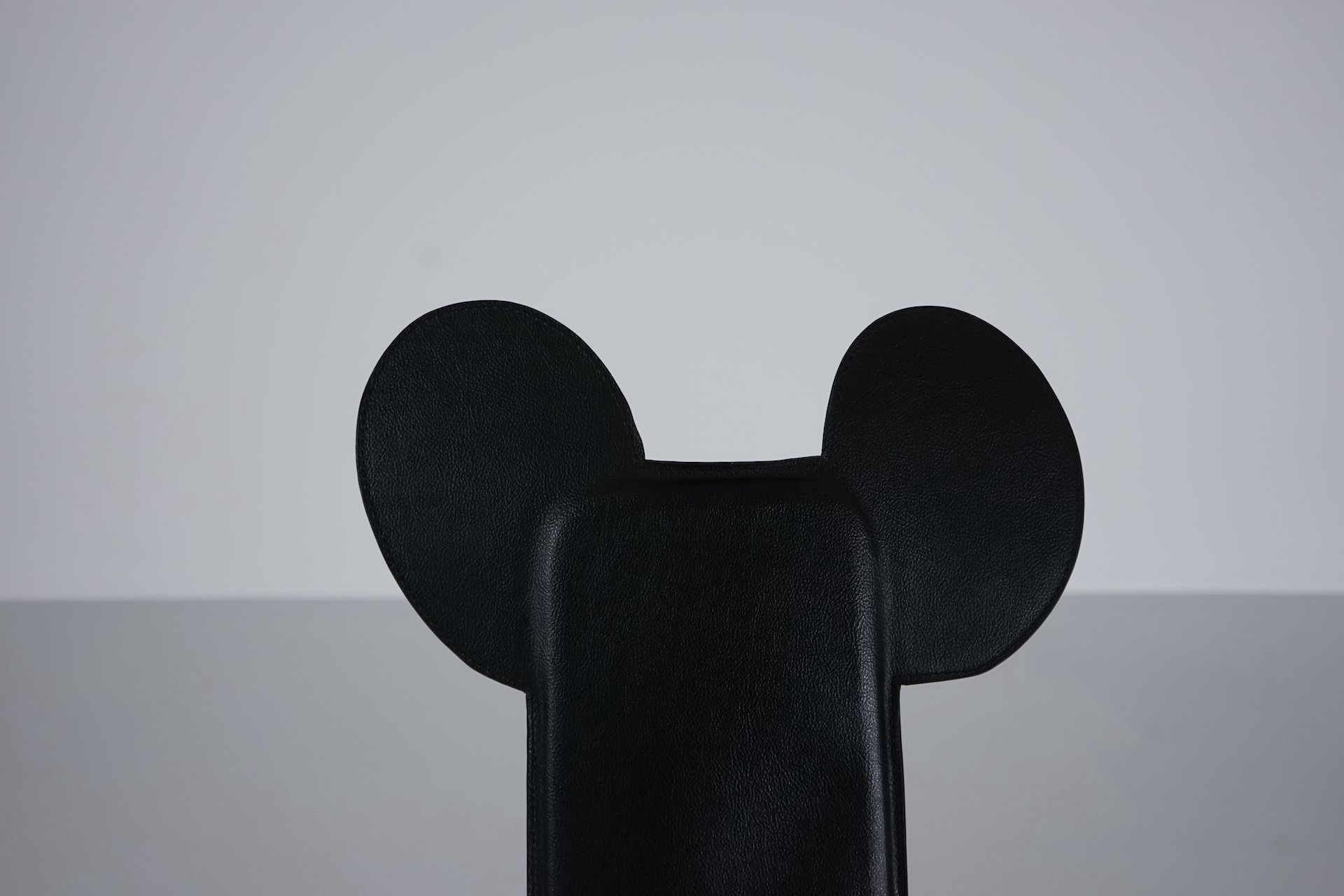 Image 2 of 11
 Image 3 of 11
 Image 4 of 11
 Image 5 of 11
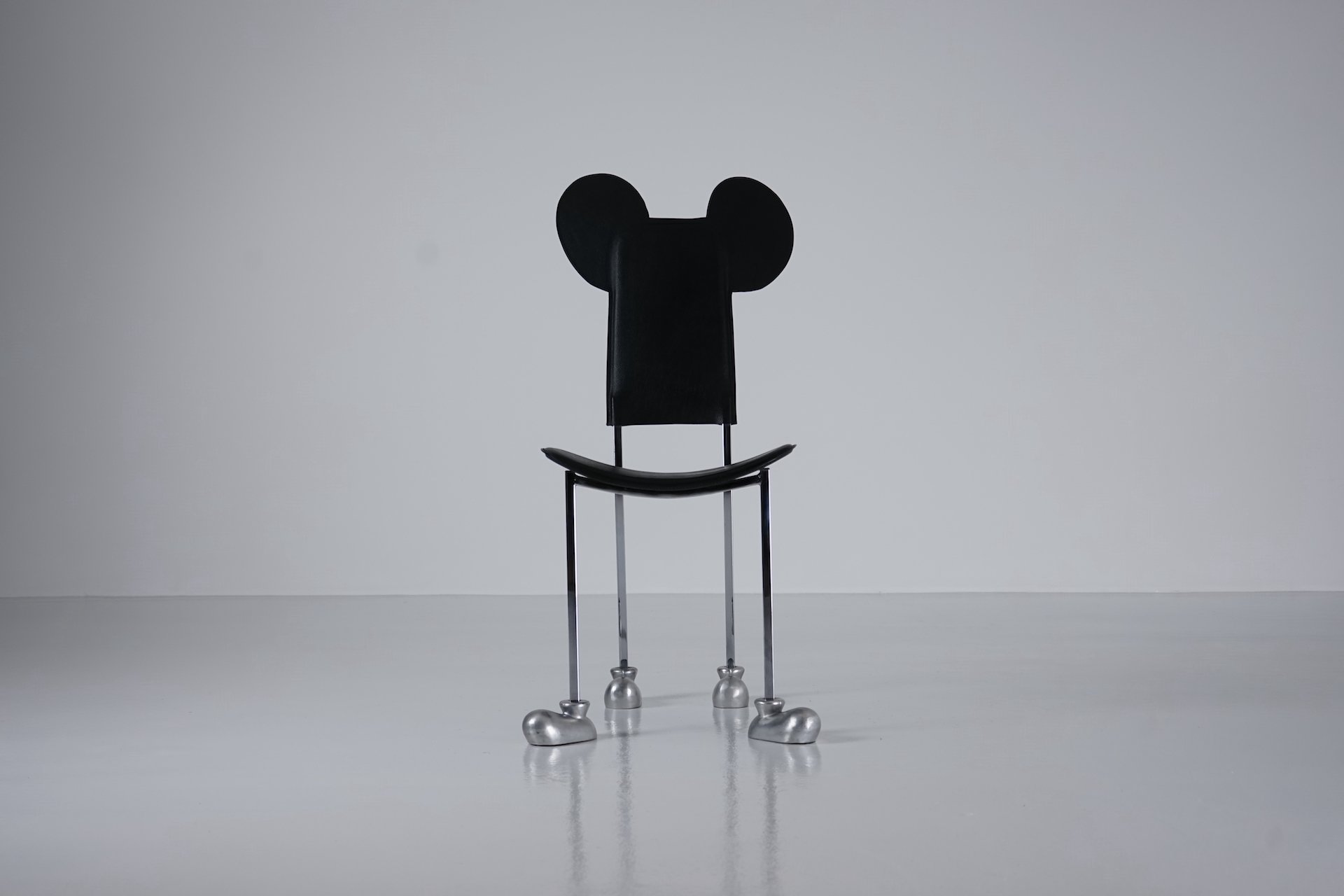 Image 6 of 11
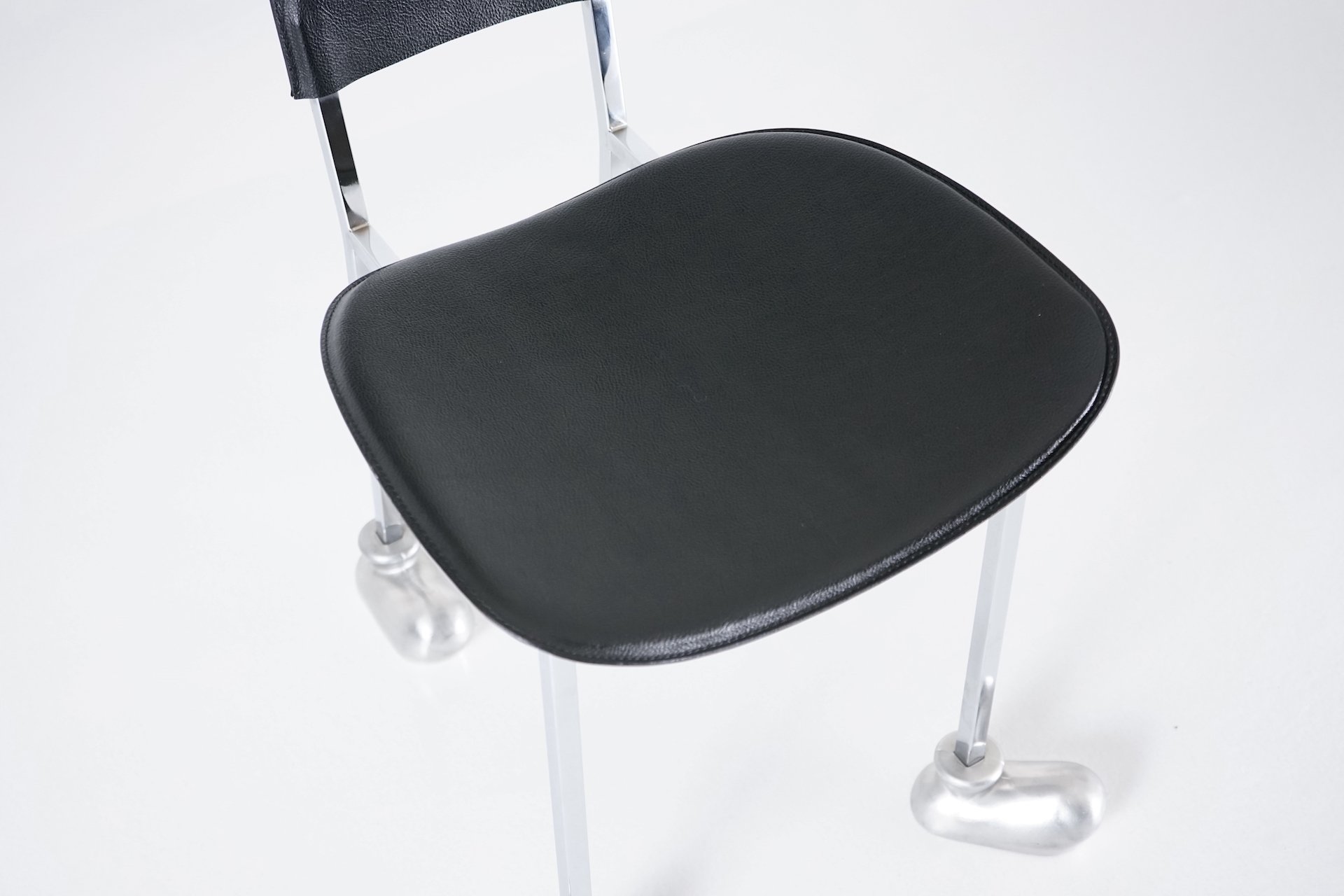 Image 7 of 11
 Image 8 of 11
 Image 9 of 11
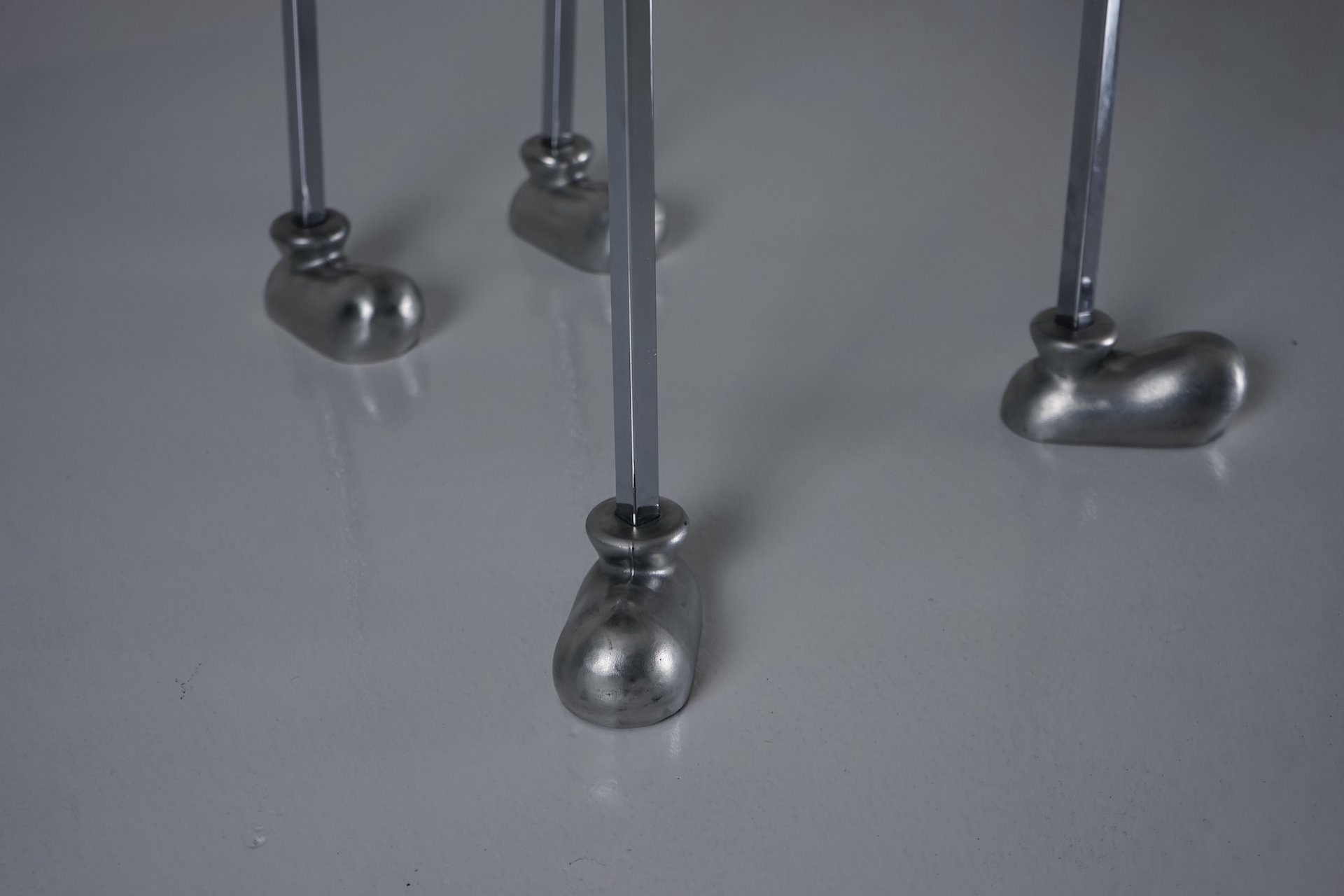 Image 10 of 11
 Image 11 of 11